STRESS AWARNESS AND RESORCES
The Job asks for so much of us, professionally, personally, emotionally, mentally, and believe it or not physically. People think just because we are safe behind a phone nd a computer screen we aren't subject to stress, but because we are behind the screen and phone they don't see what we go through. They don't see what we are asked to do and handle alone. they don't see that even though we are "safe" our heartrate skyrockets, that we work up a sweat while being stationary. There's an instant reaction to what we are hearing or not hearing in some cases. stress in the dispatch center can come from dealing with emergencies that's almost expected but what about the other stressors of the job. Having multiple officers need things from you but you only are one person so its taking a bit more time than they like or want for you to get it done. Or the stress of being under staffed, having to constantly be at the desk and missing family activities or having to go without sleep because you worked a 16 hour shift, still had house chores that NEEDED to get done (cuz lets admit we put off doing the laundry long enough and your are out of underwear and clean pants and showing up in your PJ's is frowned upon by admin). Speaking of Admin what about the stress they put on us to do the work of 8 people only staffed with 3. Even if we take the stress from listening to emergencies in real time out of the equation there is so much more we face in the dispatch center and it piles on to the outside stress from home life.
November 2nd is National Stress Awareness day. So lets be aware of the stress we experience try to not work through it but work past it. acknowledge when your stressed even if you have to whisper it to yourself out loud, take a moment feel it and acknowledge it then take the best rout to alleviate it in the capacity you are allotted. If you don't know what to do, let me suggest some options:
1. MOVE! Its proven that you need to burn off the cortisol released. so if you are able to take a lap do it. or like in our center we have a treadmill and an under desk stair stepper, pull those babies out and get to moving, burn it off and you'll feel better.
2. cant move? BREATH. I know this sounds stupid and you hear it every where... But humor me, you don't have to do the silly 4 count breathing but just a deep breath in and audibly let it out. Again i know its silly and some one might make a comment about you sighing or being
"huffy" but screw them. When you actually allow your self to audibly release your breath it tricks the mind to also let go of the stressor, agitator or what ever is causing a issue.
"huffy" but screw them. When you actually allow your self to audibly release your breath it tricks the mind to also let go of the stressor, agitator or what ever is causing a issue.
3. Drink water... its that simple take a sip. No one likes a dehydrated bunker bitch anyway. TAKE A SIP. the cold water and the momentary micro break from the task at hand can honestly be a quick little reset. its defiantly not a permeant fix but for 2 seconds it'll help and water helps rejuvenate your cells, all your cells brain, blood, EVERYTHING in your body loves that water, when you rejuvenate your cells they they will return the favor and rejuvenate you!
4. Write it down! and BURN IT!(disclaimer DO NOT light fires at work!) this is my personal favorite, Write the thoughts out when you have a second to breath (pun is very much intended here.. wink wink) you can write anything and everything no one will ever have to read it. Put those thoughts of throttling that one coworker who is all about them self and keep screwing you over on some paper, or how about all the bad names you have made for that one Karen that always calls but never treats you with any common decency or respect even though you still give her your 100% like every other caller, yup those too on the sheet they go! it doesn't have to be all angry stress either, if its something sad but stressing you out haha you guest it, on the paper therapist it goes. Home stress, hubby or wifey nagging you about the to do list? write the raw emotion and thought process down and when you are starting to feel better about the stress burn or shred the paper. Watch it happen, visually take in the symbolism of letting it go.
5. and last but not least if none of this is helping realize Chronic stress and PTSD may require outside help to combat. THERE IS NO SHAME IN NEEDING OUTSIDE HELP TO MANNAGE YOUR STRESS IN THIS INDUSRY!!!!! Never let anyone say otherwise. Untreated stress can lead to physical illness, more serious mental illness and even death. YOUR LIFE IS NOT WORTH BOTTLING IT UP!!
IF YOU NEED HELP THERE IS RESOUCES SPECIFICALLY DESIGNED FOR FIRST RESPONDERS!! ILL LIST THEM BELOW!
FIRE/EMS HELPLINE: 1-888-731-3473
FRONTLINE HELPLINE: 1-866-676-7500
OR VISIT
WWW.CODEGREENCAMPAIGN.ORG/RESOURCES
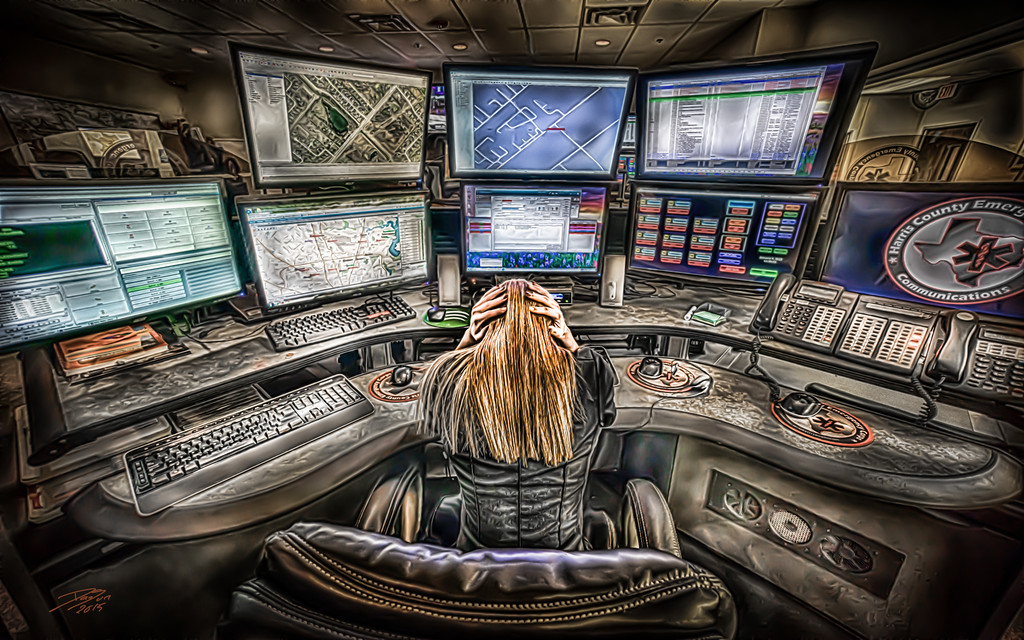
Dispatcher in Distress
10-74
In the state of Maine where I work this 10code is one that makes every dispatchers heart stop, their stomach turn, and every officer in the area drop whatever they are doing and run code blindly to help... 10-74 OFFICER IN DISTRESS AND IN NEED OF EMERGANT ASSISTANCE.
However on the flip side there is no 10Code for when a dispatcher is in distress. No one comes rushing to our aid when we are drowning. We are a rare bread that is expected to swallow it all and move on to take the next call, handle the next teletype, answer all the radio traffic in a timely manner. So how do we survive? How do we keep going when it all seems impossible? Its unspoken but well known between dispatchers that we swallow it as best we can and keep moving until shift is over, but what happens after we log out? A quote from Grey's Anatomy that hits hard in these times from the character April Kepner is " No you can't pause, because in real life the trauma doesn't stop..." Nothing is more true in this profession. Some centers have the luxury of more than one person on at a time so you can take a quick break, walk a lap around the station or parking lot, get a sip of water away from the desk but you are expected to come back and do it all over again. Then there are those centers that you can't its just you and the phones alone for 8, 10 maybe 12+ hours. I have now worked in both environments and I can honestly say for me it doesn't matter if there are 4 other people in the room or I'm alone with my thoughts the whole shift nothing changes the state of distress until I clock out and know I am DONE answering calls and radios for the day. Then what?
Depends on who you are. Some go get a after work stiff drink at their favorite watering whole, some take the longest hottest shower imaginable, others might go straight to bed skip the shower and any food all together. In my 3.5 years I've done it all, I've poured a way to big glass of wine as soon as I get home. I've jumped into the shower hoping as I physically wash away the day that some how it will also scrub away the pain, suffering and the STRESS I experienced. More times than I'd like to admit in the beginning of my career I came home and didn't even get undressed just flopped onto my made bed and passed right out because I was emotionally and mentally spent after a harrowing 16 hour shift, only to wake up a little bit later to find that one of my loved ones had checked on me at some point and took my shoes off and covered me with a throw blanket as I slept like the living dead.
At some point, I looked at my self in the mirror getting ready for work I saw what the stress was doing to me, the 25lbs weight gain, the dark circles under my eyes, the thinning hair. I knew there needed to be a better way, I had to make a change and manage it better. That is when I started reading studies about stress on the body and how to manage it. I found that exercise is the most underutilized stress management tool out there. I found moving my body, weather it be hoping in the pool and swimming laps or hitting the gym and lifting weights made me feel so much better almost lighter in a sense. The stress that weighs on my mind and my body lifted, I arise as a new woman.
When we are in distress our bodies will release cortisol. That's just a fancy medical term for sugar. In stressful situations our brain and body uses the extra sugar release as a super boost in the moment to think and fuel our fight, flight or freeze response. This is vital for human survival, if you are an officer or a firefighter in a stressful situation this energy boost is helpful. However in the dispatch setting not so much, we aren't in a foot pursuit chasing a suspect or hauling 80lbs of gear and hose up 3 flights of stairs. We aren't physically burning the sugars at a high rate by exerting ourselves, we are sitting (or standing) at a console not in dangers way. As adults we all know sugar = energy (that's why we don't give our own kids candy close to bed time or they will be wired and bouncing off the walls), when we don't burn off that energy we have trouble sleeping, we get the dark circles and baggy eyes. We all learn in middle school health class sugar not burned gets stored as fat, hence the weight gain. ITs all cause and effect. Cortisol is released, that's the cause and sometimes we cant help it, the effect comes from not properly getting rid of it from our system.
When you feel stressed, do what you can to move within your shift. Take that break from the desk if its something you can do, and if not when you get off shift take the long way to your car, go to the gym and lift weights or even just spend 15 minutes on a bike or the treadmill walking. Moving even in a light to moderate way will burn off the excess cortisol. I try not to promise anything in this line of work but I will promise this... YOU WILL FEEL BETTER. After you have done so go ahead and take that long HOT shower, and climb into bed for that well deserved rest, just move first don't let it settle.
Subscribe to:
Posts (Atom)
-
10-74 In the state of Maine where I work this 10code is one that makes every dispatchers heart stop, their stomach turn, and every officer...
-
Its one of the most common responses in my line of work to the simple "How are you?" everyone will spit out "living the dre...
-
The Job asks for so much of us, professionally, personally, emotionally, mentally, and believe it or not physically. People think just bec...


